
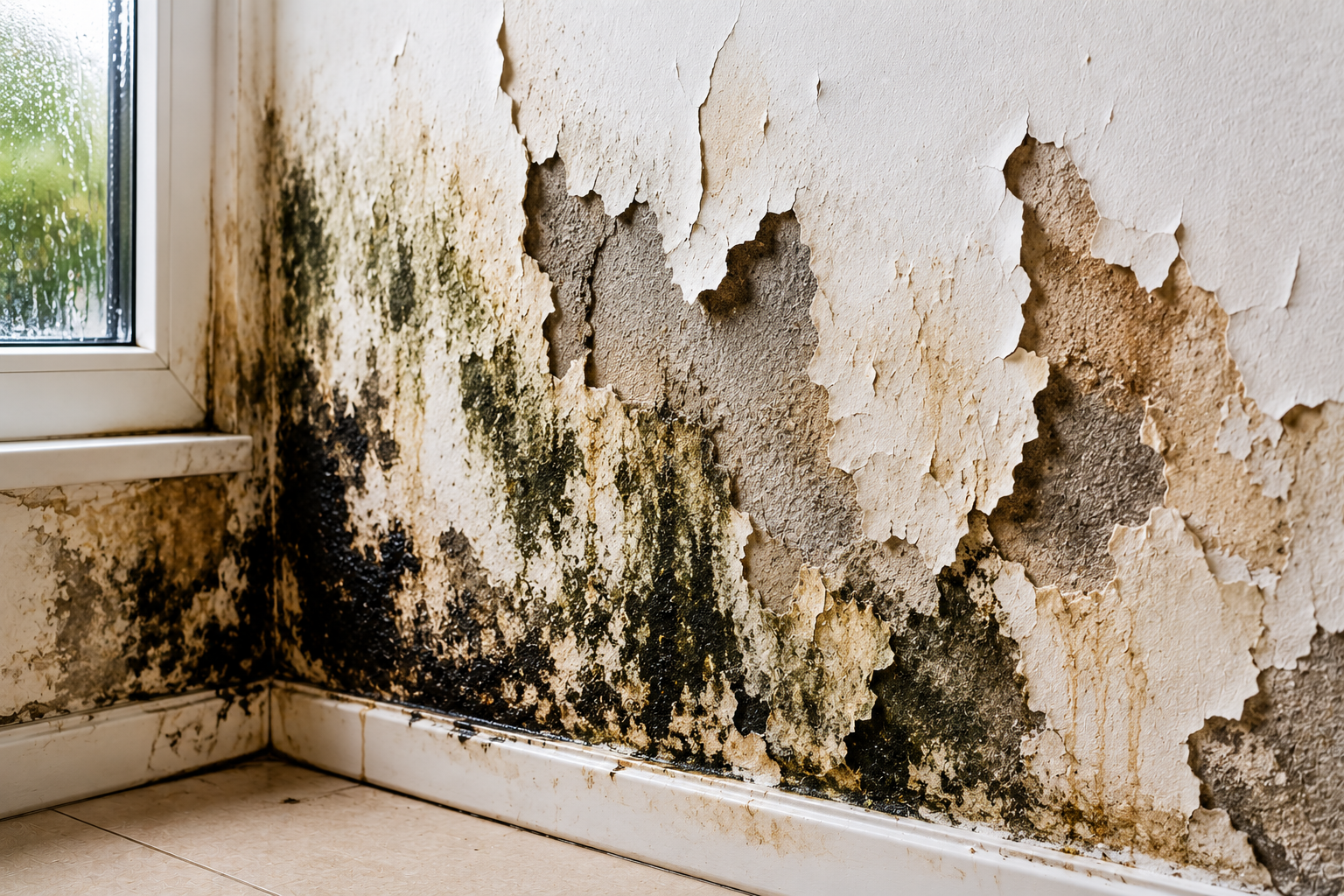
The peeling wall is a common problem in homes, apartments, and commercial establishments. Besides compromising the aesthetics of the environment, this problem can indicate infiltration, excess moisture, hidden leaks, or painting failures.
Many people believe that just sanding the wall and applying a new coat of paint is enough. However, when the cause of the problem is not identified, the paint peels off again in a short time.
In this complete guide, you will learn about the main causes of peeling walls, how to correctly solve the problem, and what precautions to take to prevent it from happening again.
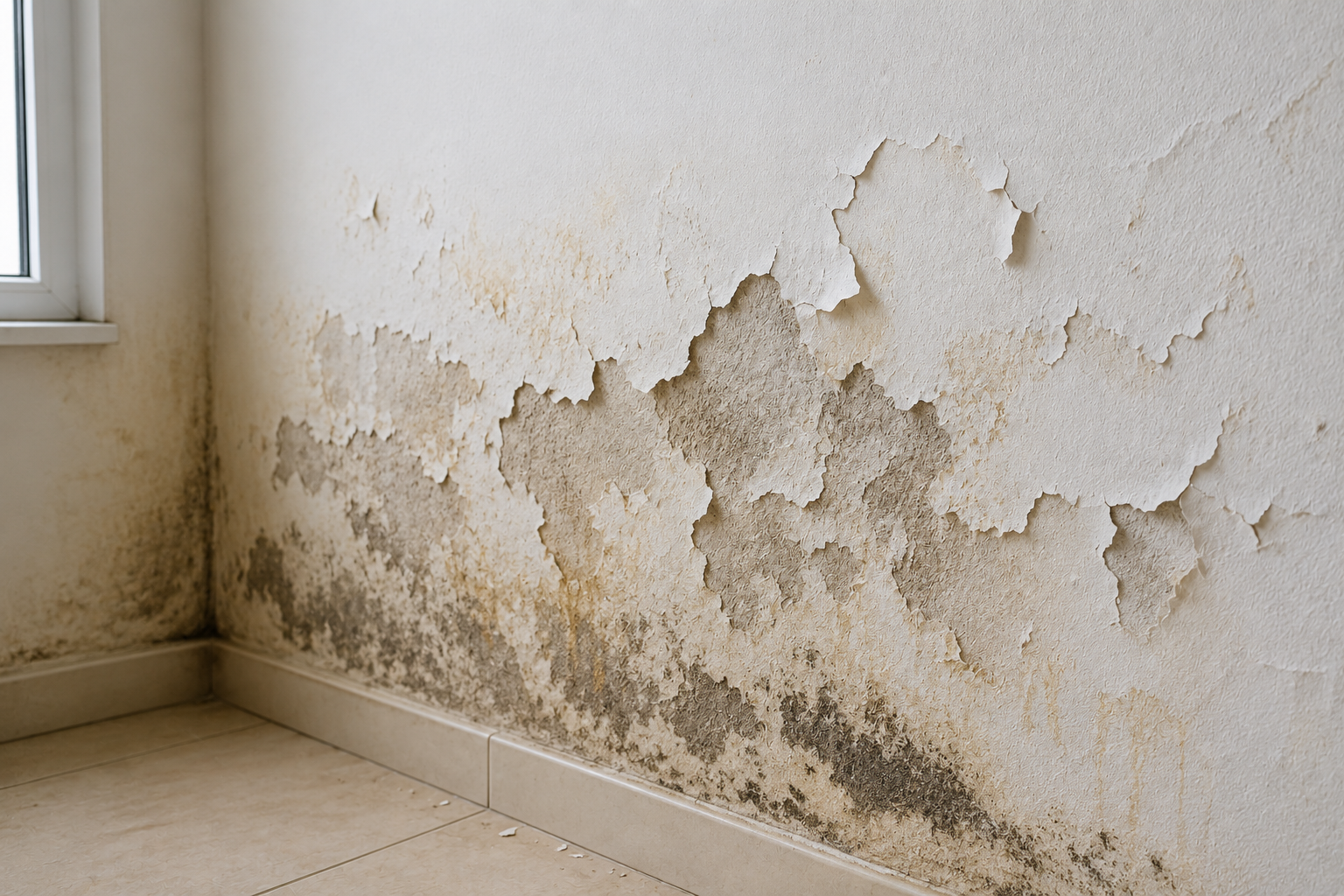
What Makes the Wall Peel?
Paint can peel for various reasons. In many cases, the problem is related to the presence of moisture inside the wall.
The most common causes include:
- infiltration
- hidden leaks
- lack of waterproofing
- paint applied over a damp surface
- use of inadequate paint
- excess moisture in the environment
- structural problems
Identifying the cause is the first step to a definitive solution.
Can Infiltration in the Wall Cause the Paint to Peel?
Yes.
Infiltration is one of the main causes of paint peeling.
When water penetrates the masonry, it weakens the paint's adhesion and causes blisters, stains, and peeling.
Signs of infiltration include:
- dark stains
- mold on the wall
- blisters on the paint
- loose plaster
- musty smell
The sooner the problem is solved, the less damage there will be.
How to Know if There is Moisture in the Wall
Not all moisture is visible at first.
Some important signs are:
- peeling paint
- yellowish stains
- frequent mold
- musty smell in the environment
- cold wall to the touch
These symptoms usually indicate excess water inside the structure.
Can a Hidden Leak Cause the Wall to Peel?
Yes.
Often the problem is not with the rain or external infiltration.
Pipes with small leaks can keep the wall constantly damp.
Be aware of the following signs:
- increasing water bill without explanation
- localized moisture
- bubbling paint
- recurrent mold
- loose plaster
Blisters on the paint can be caused by problems that are not always visible. Understand better the causes and solutions for infiltration in the wall.
How to Solve a Peeling Wall
The correct repair requires more than just repainting.
Step 1: Discover the Origin of the Problem
Check:
- leaks
- infiltration
- lack of waterproofing
- ventilation problems
Step 2: Remove All Loose Paint
Use a spatula to remove the compromised parts.
Step 3: Correct the Moisture
Without eliminating the cause, the paint will peel again.
Step 4: Apply a Sealer
The sealer helps prepare the surface.
Step 5: Apply Corrective Mass
Regularize the wall before painting.
Step 6: Paint Again
Use quality products and those indicated for the environment.
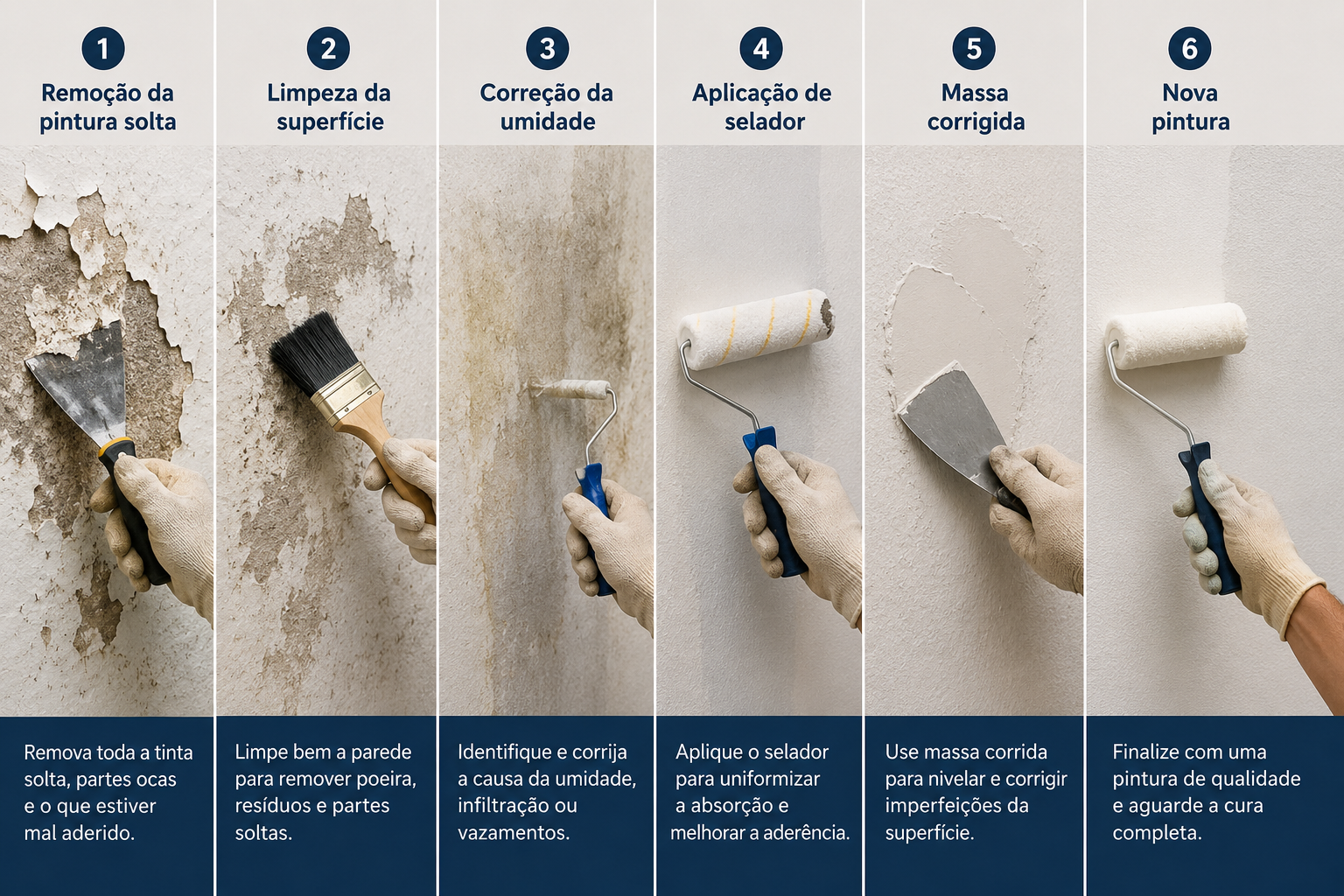
Wall recovery process.
What is the Best Paint for a Wall with Moisture?
In areas subject to moisture, it is recommended:
- premium acrylic paints
- antimold paints
- waterproofing products
- specific sealers for damp areas
These materials offer greater resistance and durability.
Does Antimold Paint Work?
Yes.
Antimold paint helps reduce the appearance of fungi and stains caused by moisture.
However, it does not solve infiltration or leaks.
First, it is necessary to eliminate the cause of the problem.
How to Prevent the Wall from Peeling Again
Some preventive measures can greatly increase the durability of the paint.
Important Care
- quickly fix infiltrations
- fix leaks
- improve ventilation in environments
- use quality materials
- perform periodic maintenance
Prevention is always cheaper than a complete renovation.
Peeling Wall in the Bedroom
The bedroom is one of the environments most affected by the lack of air circulation.
When there is little ventilation, moisture accumulates and favors:
- mold
- mildew
- peeling paint
Leave the windows open daily whenever possible.
Peeling Wall Next to the Bathroom
This situation usually occurs due to excess steam.
The steam generated by hot showers can significantly increase the moisture in the environment.
Good ventilation helps reduce the problem.
Are Mold and Peeling Wall Related?
Most of the time, yes.
Mold is one of the most common signs of excess moisture.
When the wall remains damp for a long time, the paint loses adhesion and starts to peel.
If you have already identified mold in the environment, it is essential to investigate the origin of the moisture.
In some cases, moisture also favors the appearance of stains and mold. See how to eliminate mold on the wall correctly.
Recommended Product for Wall Recovery
After correcting the cause of the moisture, some products can help in the recovery of the surface.
Among them:
- sealers
- waterproofing products
- antimold paints
- mold removers
Recommended Paint for Those Looking for Practicality and Good Finishing
Among the options available for internal painting, Eucatex Peg & Pinte stands out for its good performance, efficient coverage, and practical application. It is an interesting alternative for those who want to renovate walls and environments without complications.

Click to learn more about the product, its characteristics, and updated information.
When to Call a Professional?
Seek specialized help when:
- the problem returns frequently
- there is constant infiltration
- the plaster is coming off
- there is a suspicion of hidden leakage
- the affected area is extensive
A professional will be able to identify the exact origin of the problem and indicate the most appropriate solution.
Frequently Asked Questions (FAQ)
What Makes the Wall Paint Peel?
The main reasons are infiltration, leaks, excess moisture, and failures in surface preparation.
Does a Peeling Wall Always Indicate Infiltration?
Not always. However, infiltration is one of the most common causes.
Can I Paint Over Peeling Paint?
No. It is necessary to remove all compromised parts before repainting.
Does Antimold Paint Solve Infiltration?
No. It helps prevent fungi, but does not eliminate the source of moisture.
How to Know if There is a Hidden Leak?
Signs such as an increasing water bill, stains, and constant moisture can indicate internal leaks.
How Long Does a Well-Done Paint Job Last?
When the wall is dry and correctly prepared, the paint can last many years.
Want to learn more about painting and residential maintenance? Also, check out our guides on infiltration in the wall, mold on the wall, peeling wall, and has your account increased?
Conclusion
A peeling wall is a warning sign that should not be ignored. In many cases, the problem is related to infiltration, excess moisture, or hidden leaks.
Before simply repainting, it is essential to identify and correct the cause of the deterioration. This way, you avoid unnecessary expenses and increase the durability of the paint.
With proper care, suitable materials, and preventive maintenance, it is possible to keep the walls beautiful, protected, and problem-free for much longer.