
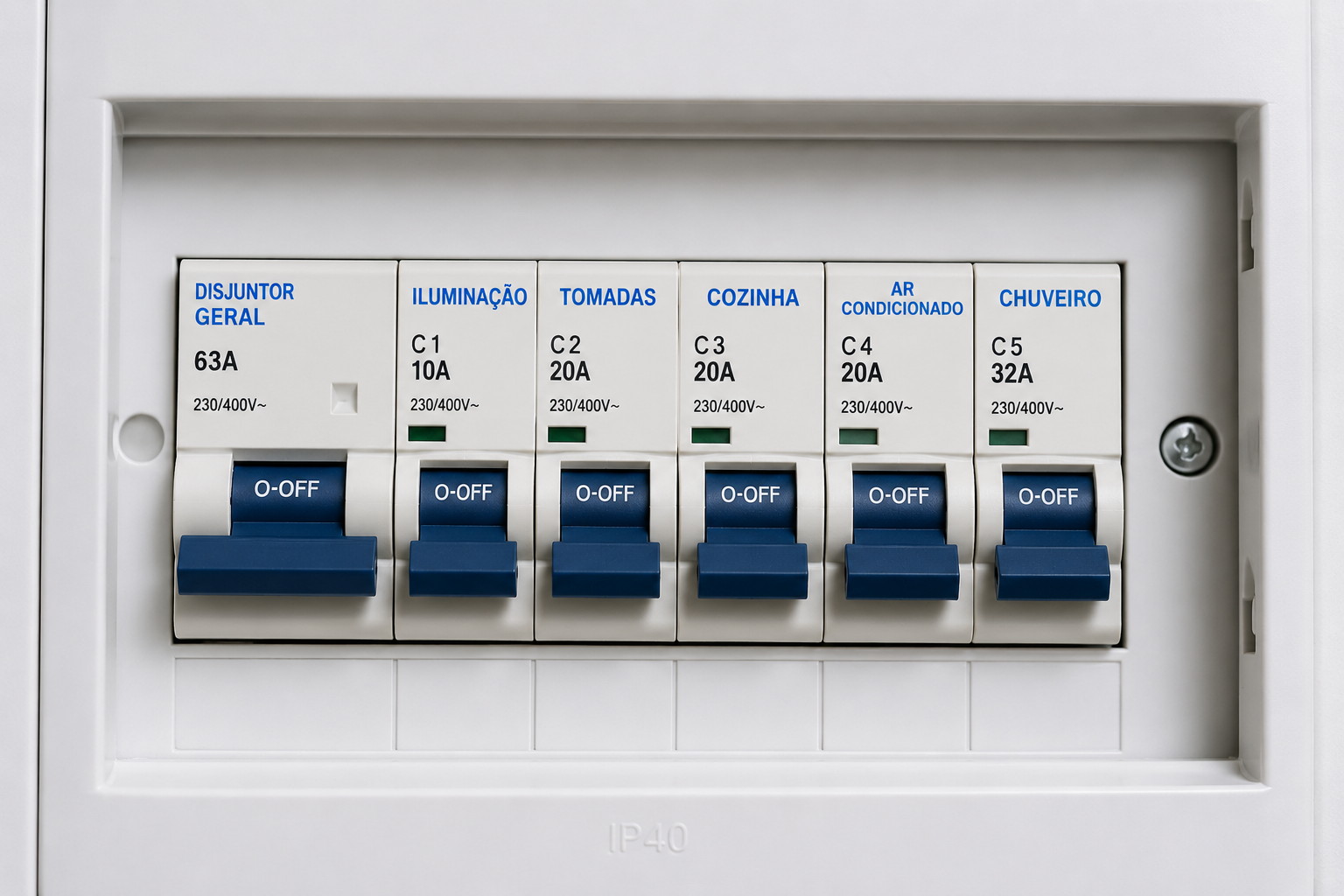
If the switch in your house is frequently disarmed, it's essential not to ignore the problem. Although many people simply turn the device back on and continue as usual, this situation can indicate electrical failures that put the safety of the residence at risk.
The circuit breaker exists solely to protect the electrical installation against overloads, short circuits, and current leaks. When it disarms, it signals that something is not working correctly.
In this article, you will understand the main causes of a circuit breaker disarming on its own, when the problem can be dangerous, and what to do to resolve the situation.
What is the Circuit Breaker and What is it For?
The switch is a protection device installed in the electrical panel of the residence.
Its function is to automatically interrupt or shut off the power supply when situations that can cause damage to the electrical installation or connected equipment are detected.
Without this protection, the risk of fires and electrical accidents would be much higher.
Why Does the Circuit Breaker Trip Frequently?
Frequent tripping can occur for various reasons.
The closest ones include:
- Electrical overload;
- Short circuit;
- Faulty equipment;
- Old wiring;
- Current leak;
- Circuit breaker.
Identifying the correct cause is essential to avoid greater problems.
Electrical Overload is the Most Common Cause
The overload occurs when several appliances are used at the same time on the same circuit.
Equipment such as:
- Electric shower;
- Microwave;
- Air fryer;
- Iron;
- Air conditioner;
can require a large amount of energy.
When the circuit limit is exceeded, the switch trips to protect the installation.
Read also:
If you notice that outlets or plugs get hot during the use of powerful appliances, check our complete guide on:
Outlet Heating Up: Is it Dangerous?
Short Circuit Can Cause the Circuit Breaker to Trip Periodically
The short circuit occurs when two conductors come into contact in an improper manner.
When this happens, the electric current increases rapidly and the circuit breaker trips almost instantly.
Some common signs include:
- Sparks;
- Burning smell;
- Melted outlets;
- Sudden power outage.
In these cases, it is recommended to stop using the installation until the cause is identified.
Faulty Equipment Can Also be the Cause
Not always the problem is in the electrical installation.
A household appliance with an internal fault can cause the constant tripping of the circuit breaker.
A good way to identify the cause is to turn off all appliances and plug them back in one by one.
This makes it easier to discover which equipment is causing the problem.
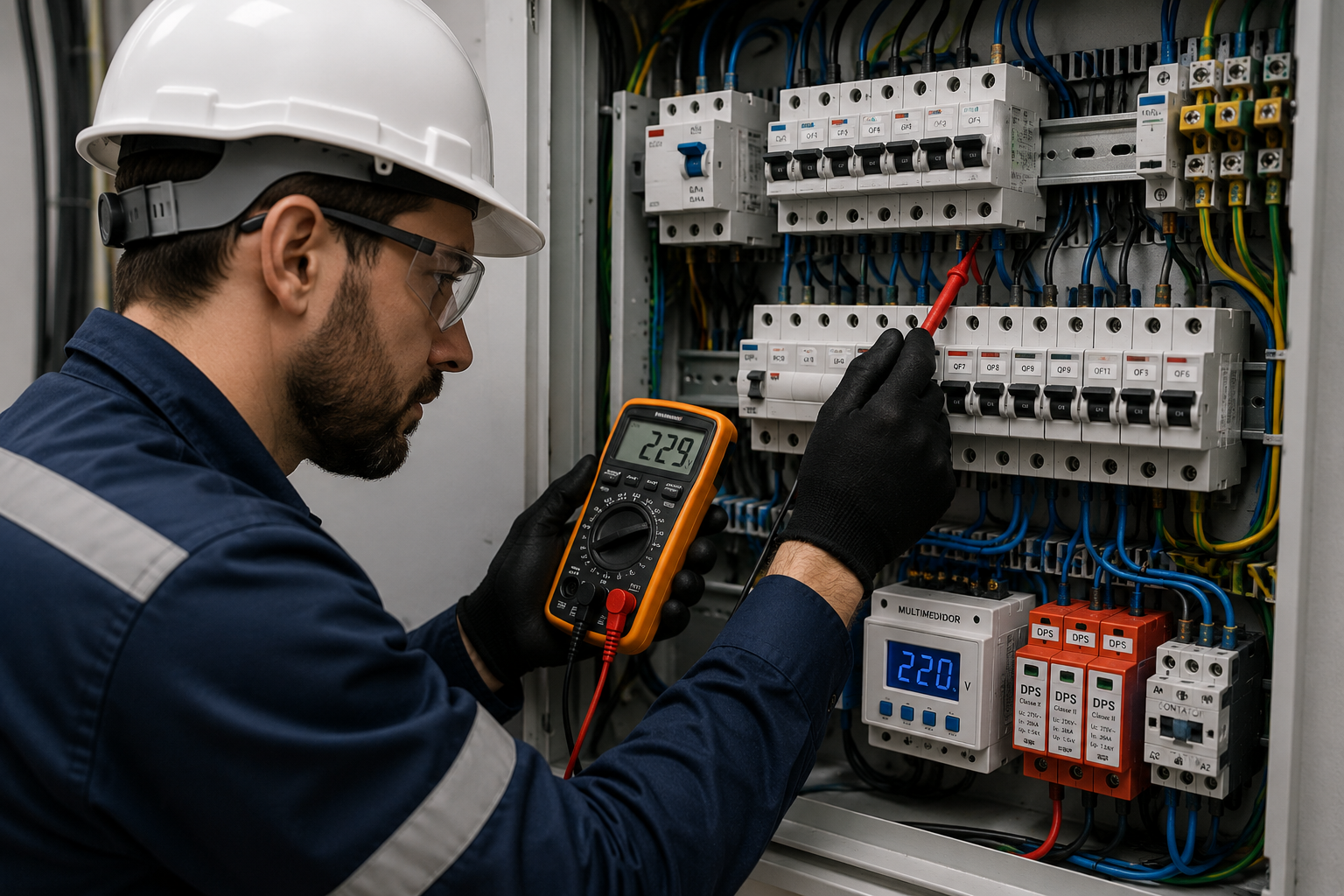
Recommended Product
A digital multimeter can help identify basic faults in outlets, equipment, and electrical circuits.
Old Wiring Can be Overloaded
Many homes have old electrical installations that were not designed to support the amount of modern equipment.
Over time, the wires can also deteriorate.
Among the main problems are:
- Deteriorated insulation;
- Excessive heating;
- Poor contact;
- Voltage drop.
In these situations, the evaluation of an electrician is indispensable.
Current Leak is a Dangerous Problem
The current leak occurs when part of the electric energy escapes through unplanned paths.
In addition to increasing energy consumption, it can represent a risk of electric shock.
The symptoms include:
- Circuit breaker tripping without apparent reason;
- Shocks when touching equipment;
- Fluctuations in the electrical grid.
Read also:
An energy bill is not always the only expense that can increase without explanation. Hidden leaks can also generate significant losses.
Has Your Water Bill Increased?
How to Identify Which Circuit is Causing the Problem
The first step is to observe which circuit breaker is tripping.
Normally, the electrical panel has separate circuits for:
- Lighting;
- Outlets;
- Shower;
- Air conditioner;
- Kitchen.
Identifying the affected circuit helps a lot in the diagnosis.
What to Do When the Circuit Breaker Trips Frequently?
Some measures can help:
- Turn off high-consumption appliances;
- Check for signs of burning;
- Observe if there is a burning smell;
- Do not replace the circuit breaker with a larger model without technical guidance;
- Seek specialized help.
Ignoring the problem can cause damage to the electrical installation.
When to Call an Electrician?
You should seek a professional when:
- The circuit breaker does not stay on;
- There is a burning smell;
- There are sparks;
- Equipment stops working;
- The problem occurs repeatedly.
In these cases, a technical diagnosis is essential.
Read also:
Structural problems and leaks can cause deterioration in walls and installations of the residence over time.
How to Identify and Solve Leaks
How to Prevent the Circuit Breaker from Continuing to Trip
Prevention is the best solution.
Some important precautions include:
- Performing periodic electrical maintenance;
- Avoiding;
- Using certified equipment;
- Updating old installations;
- Hiring professionals.
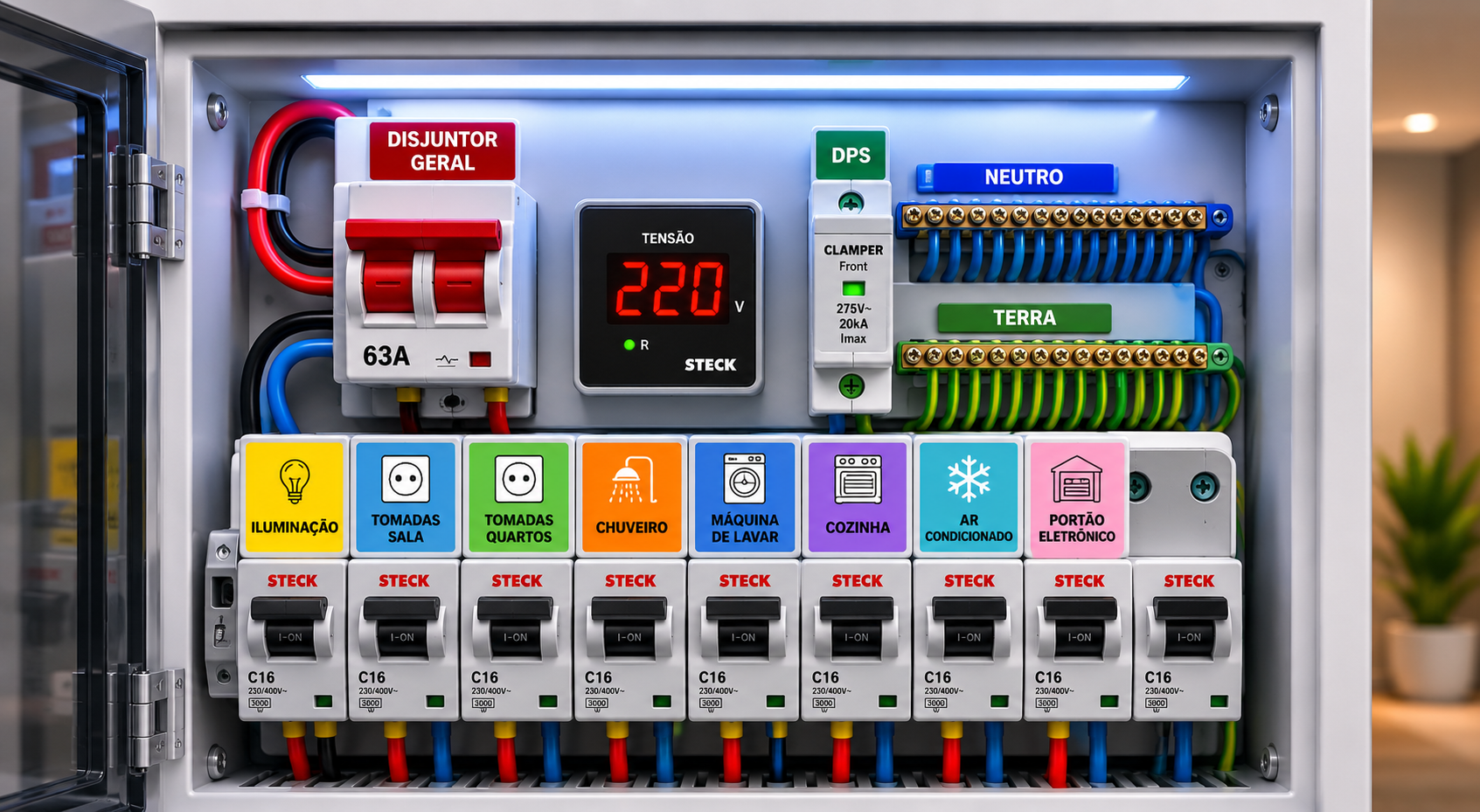
Useful Tool for Electrical Maintenance
A digital multimeter is one of the most used tools for basic diagnosis of residential electrical problems.
Conclusion
A circuit breaker that trips on its own should never be ignored. Although the problem may be caused by a simple electrical overload, it can also indicate more serious faults, such as short circuits, current leaks, or compromised old installations.
By identifying the cause quickly, you avoid risks of fire, damage, and greater losses. Always seek a qualified electrician to perform a complete evaluation of the installation when the problem occurs frequently or presents signs of danger.
Keeping the electrical network in good condition is one of the most important ways to ensure the safety of your home and family.