
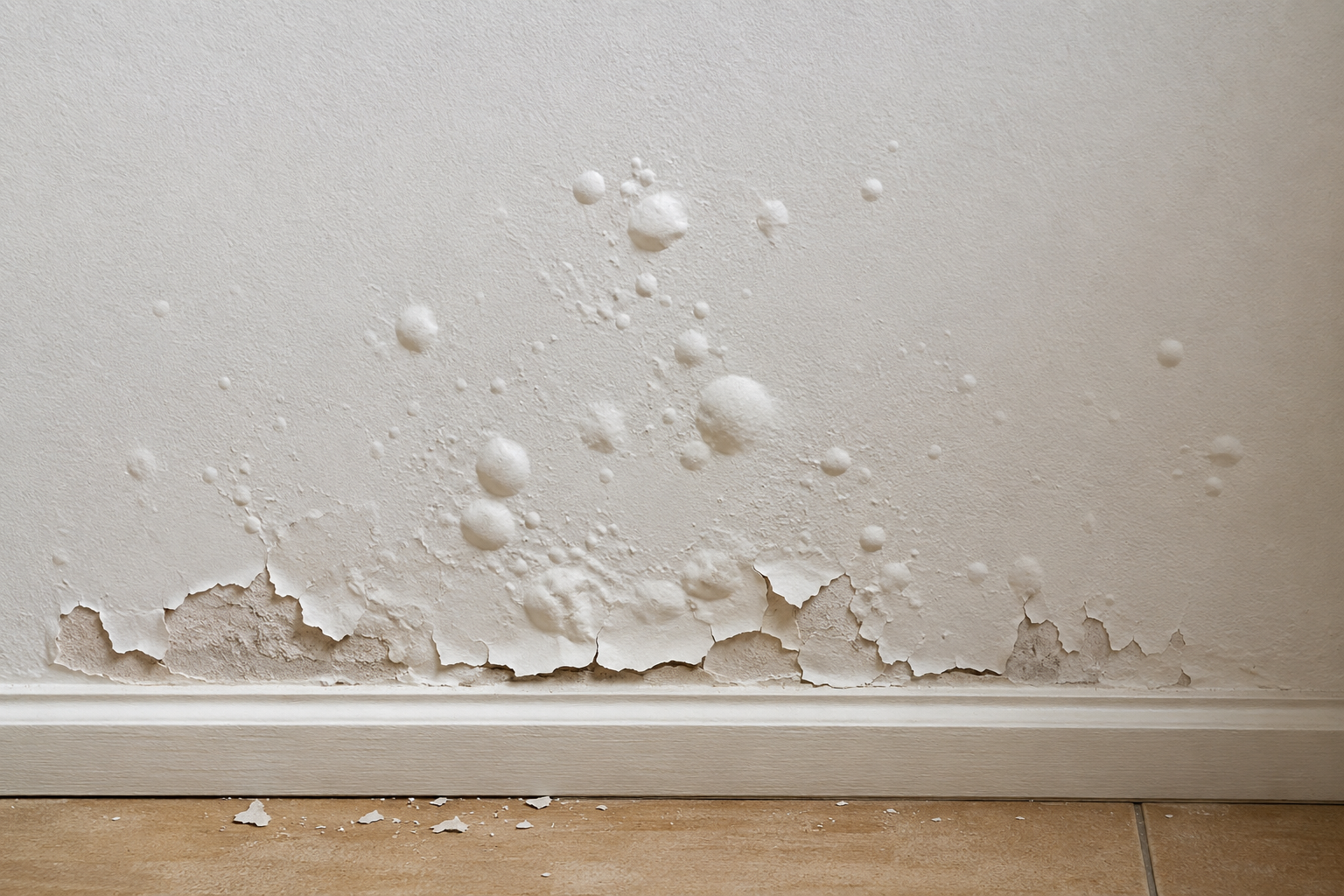
You finished painting your house and soon saw small bubbles appearing on the wall? This is one of the most common problems in internal and external environments, compromising both the appearance and durability of the paint.
Although many people believe that simply applying a new coat of paint will solve the problem, the truth is that bubbles are usually just a symptom. If the cause is not correctly identified, they tend to reappear quickly.
In this guide, you will discover the main causes of bubbles in paint, learn how to correct the problem, and learn about measures that help prevent it from happening again.
What Causes Bubbles in Paint?
Bubbles appear when there is air, vapor, or moisture trapped between the surface and the paint layer. Over time, this pressure causes the paint to peel off, creating small visible elevations.
The most common causes are:
1. Moisture
Moisture is the main culprit behind the appearance of bubbles. When water penetrates the wall, it tries to evaporate and ends up pushing a paint film.
2. Hidden Infiltrations
Many infiltrations are not immediately visible. Water can travel through parts of the structure before reaching the paint.
3. Hydraulic Leaks
Internal pipes with small leaks can generate constant moisture in the wall.
4. New Plaster
The plaster needs to go through the curing process before receiving paint. Painting before this period favors the appearance of bubbles.
5. Lack of Sealer
The sealer helps to uniformize the surface absorption. Without it, the adhesion of the paint can be compromised.
6. Painting Over a Damp Surface
Even if the wall appears dry, internal moisture can still be present.
7. Excess Coats
Applying many layers in short intervals makes it difficult for the paint to dry properly.
8. Use of Accredited Paint
Not all paint is suitable for every environment.
9. Lack of Ventilation
Closed places accumulate more moisture, favoring problems in the paint.
How to Correct Bubbles in Paint
Before painting again, it is essential to agree on the origin of the problem.
Follow this process:
Scrape off all compromised paint.
Sand the surface.
Investigate signs of infiltration.
Correct leaks or cracks.
Wait for complete drying.
Apply sealer or prepared background.
Repaint.
Many people ignore the investigation stage and end up spending money repeating the service several times.
Bubbles in paint can be caused by problems that are not always visible. Understand better the causes and solutions for infiltration in the wall.
Recommended Product for Paint Recovery
After correcting the cause of the problem, using a quality paint can significantly increase the durability of the paint.

Peeling Wall: When is it Related to Bubbles?
In many cases, bubbles are just the first stage of the problem.
As continuous moisture heats up, the paint loses adhesion and starts to peel.
The main reasons include:
Infiltration;
Lack of surface preparation;
New plaster;
Inadequate paint;
Constant moisture.
If the wall is peeling, the ideal is to completely remove the compromised area before the new paint.
If the paint has already started to come off, also check our guide on peeling wall and find out how to solve the problem.
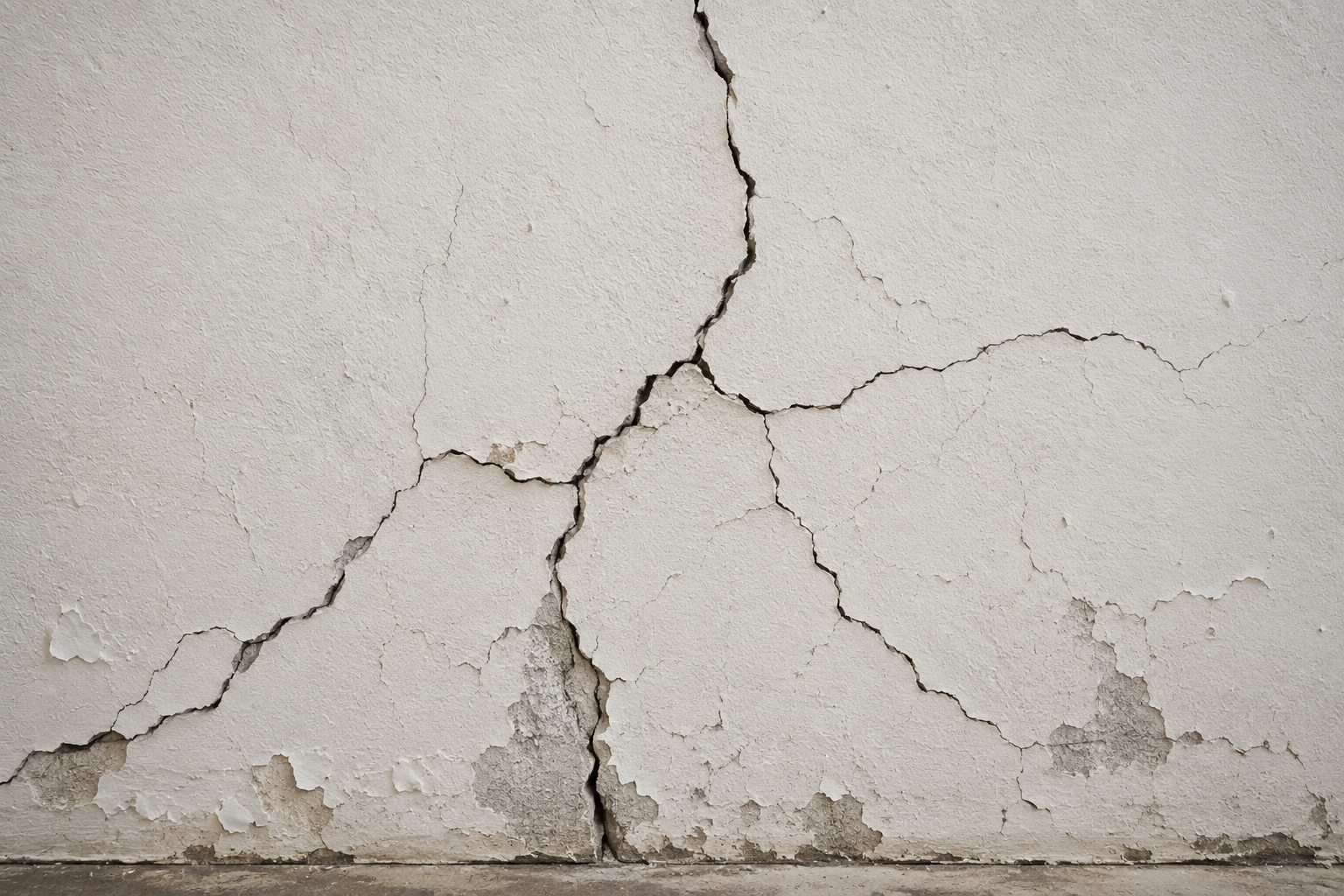
Cracks in the Wall: Can They Cause Bubbles?
Yes.
Cracks allow water to enter, especially in external walls.
Over time, the accumulated moisture behind the paint can cause:
Bubbles;
Mold;
Peeling;
Stains.
Therefore, every crack should be evaluated before painting.
Stains on the Wall: A Sign That Something is Wrong
Stains usually appear before bubbles.
The most common signs are:
Yellowish Stains
May indicate infiltration.
Dark Stains
Often associated with mold.
Whitish Stains
May indicate efflorescence caused by mineral salts.
Identifying these changes early on prevents greater damage.
In some cases, moisture also favors the appearance of stains and mold. See how to eliminate mold on the wall correctly.
Wall Discoloration: How to Recover the Original Appearance
Not always the solution is to repaint.
In some cases, a proper cleaning already improves the appearance of the wall a lot.
Useful tips:
Use a soft cloth;
Use a neutral detergent;
Avoid abrasive products;
Do tests in small areas.
When the paint is worn out, repainting is still the best alternative.
Bubbles in Paint After Rain
Many people notice bubbles after intense rain periods.
This happens because water finds small flaws in the structure and manages to penetrate the wall.
The most common causes include:
Broken tiles;
Clogged gutters;
Cracks in the facade;
Inadequate waterproofing.
If the problem appears only in rainy periods, inspecting the external area should be a priority.
Bubbles in Paint on Internal Wall
When bubbles appear in internal environments, they are usually related to moisture.
The most affected areas are:
Bathrooms;
Kitchens;
Laundries;
Poorly ventilated areas.
It is also worth investigating leaks in embedded pipes.
Bubbles in Paint on External Wall
External walls face more severe conditions.
Among the factors that contribute to the problem are:
Intense sun;
Constant rain;
Temperature changes;
Cracks in the facade.
Good waterproofing helps to increase the lifespan of the paint.
How to Paint a Wall Without Roller Marks
After correcting the bubbles, it is essential to guarantee a uniform finish.
Some recommendations:
Use suitable rollers;
Do not overload the roller with paint;
Work in complete areas;
Respect the drying time;
Maintain constant movements.
These precautions greatly reduce the risk of visible marks.
Recommended Product for Better Finish
Quality paints usually offer better coverage, yield, and finish.

How Many Coats of Paint to Apply?
The ideal quantity depends on the state of the wall and the coverage capacity of the paint.
In general:
2 coats meet most cases;
3 coats may be necessary on problematic surfaces.
More important than the quantity is respecting the interval recommended by the manufacturer.
How to Calculate the Amount of Paint for a Wall
The basic calculation is simple:
Area = Height × Width
Example:
A wall with a height of 3 meters and a width of 4 meters has:
3 × 4 = 12 m²
Then check the yield informed on the packaging to know how many liters will be needed.
How to Avoid Bubbles in New Paint
Prevention is always cheaper than repair.
Some important measures include:
Correcting infiltrations before painting;
Waiting for the plaster to cure;
Applying sealer;
Using suitable products;
Respecting drying times;
Ensuring good ventilation in the environment.
These precautions significantly increase the durability of the paint.
Frequently Asked Questions (FAQ)
What makes paint create bubbles?
Usually moisture, infiltration, or inadequate application.
Can I paint over bubbles?
No. The correct thing is to remove the compromised paint and eliminate the cause.
Do bubbles always indicate infiltration?
No. They can also be caused by internal moisture or application failures.
How many coats should I apply?
In most cases, two or three coats.
How do I know if the wall is damp?
Stains, mold, moisture smell, and peeling are usually important signs.
Is the sealer really necessary?
On many surfaces, yes. It improves adhesion and helps to uniformize absorption.
Recommended Product
If you intend to renovate your home's paint, it's worth knowing options that offer good coverage, yield, and durable finish.

Conclusion
Bubbles in paint can have several causes, but almost always are related to the presence of moisture or failures in surface preparation.
Correctly identifying the origin of the problem is essential to avoid unnecessary expenses and ensure a durable paint job. Additionally, paying attention to signs such as cracks, stains, peeling, and infiltration helps to prevent greater damage.
With proper care, it is possible to keep the walls beautiful for much longer and significantly reduce the need for future repairs.